Long hairstyles with layers for straight hair can transform lengthy strands from heavy and uniform into flowing, dimensional shapes. Because straight hair displays cutting lines clearly, thoughtful layer placement can create visible movement around the face, crown, and ends. The result maintains beautiful length while giving the hairstyle more personality, versatility, and natural-looking flow.
The ideal layering technique depends on density, strand thickness, and how much daily styling you prefer. Fine straight hair often benefits from subtle layers and stronger perimeters, while thick straight hair can support more extensive weight removal. These 18 long layered hairstyles for straight hair explore polished, soft, dramatic, and low-maintenance options that showcase sleek texture beautifully.
Creating Dimension Without Losing the Sleek Character
Straight hair reveals the structure of a layered haircut more clearly than heavily textured hair. Gradual transitions produce a softer appearance, while choppy or disconnected layers create stronger definition. The amount of contrast should complement both your density and preferred styling routine.
A strong perimeter can also be important, particularly for finer textures. Keeping enough density through the ends prevents excessive transparency, while carefully positioned facial or interior layers introduce movement where it makes the greatest visual difference.
Long Straight Hair With Face-Framing Layers
Face-framing layers create visible movement around the cheekbones, jawline, and neckline while preserving substantial length throughout the back. Straight texture displays these graduated pieces particularly clearly, making the haircut feel noticeably refreshed without requiring extensive layering everywhere.

Apply lightweight heat protection before blow-drying the hair smooth. Use a round brush to direct the shorter front pieces away from the face, creating gentle curvature rather than dramatic curls. Finish with minimal serum through the ends to enhance shine while preserving natural root movement.
Long Straight Butterfly Layers
Butterfly layers combine shorter sweeping sections around the face with progressively longer lengths throughout the rest of the hair. On straight texture, the differences remain clearly visible, producing dramatic movement while preserving the impressive length of the lower sections.

Apply lightweight volumizing mousse around the crown before blow-drying. Use a large round brush to direct the shorter layers away from the face and create broad curves through the longer sections. Once cooled, loosen everything gently so the shape remains flowing rather than excessively sculpted.
Long Straight Layers With Curtain Bangs
Curtain bangs provide soft forehead framing before gradually blending into longer facial layers. Combined with lengthy straight hair, the divided fringe breaks up a uniform silhouette while creating a smooth transition between shorter front pieces and flowing back sections.

Blow-dry the fringe forward initially before directing each side away from the face with a round brush. Keep the remaining hair sleek while introducing gentle curvature through the facial layers. Lightweight finishing spray can preserve the fringe direction without restricting its natural movement.
Long Straight U-Shaped Layers
A U-shaped layered cut creates a gently rounded perimeter through the back while subtle internal sections add movement. The curved outline maintains visual density and prevents lengthy straight hair from ending in one completely rigid horizontal line.

Blow-dry the hair smooth to showcase the rounded perimeter and gradual layer transitions. Direct the front pieces gently away from the face for additional softness. Regular trims help preserve the clean U-shaped outline, particularly when the longest ends are prone to becoming fragile or uneven.
Long Straight V-Cut Layers
A V-cut creates a pointed outline through the back while graduated layers add movement around the sides. Straight hair makes the distinctive perimeter especially visible, creating an elegant silhouette that preserves dramatic central length while reducing heaviness toward the outer edges.

Wear the hair sleek when you want the V-shaped outline to remain particularly noticeable. Apply lightweight smoothing serum through the mid-lengths and ends after drying. Keep the central point regularly trimmed so the longest section remains substantial instead of becoming thin or overly tapered.
Long Straight Hair With Invisible Layers
Invisible layers remove strategic interior weight without producing obvious shorter sections along the external surface. The technique gives straight hair greater movement while preserving a seamless appearance, making it excellent for anyone who prefers subtle rather than highly noticeable layering.

Apply lightweight smoothing cream before blow-drying the hair straight. Use moderate root elevation to prevent the upper sections from appearing flat, then polish the lengths with controlled tension. Minimal finishing serum enhances shine while allowing the subtle internal movement to remain visible.
Long Straight Hair With Blunt Ends and Layers
Combining subtle layers with a stronger blunt perimeter provides movement throughout the upper sections while maintaining substantial-looking ends. This structure works especially well for fine or medium straight hair that can appear sparse when too much weight is removed.

Apply lightweight root-lifting foam before blow-drying smooth. Create gentle bends through selected facial layers while keeping the lower outline cohesive and polished. Use minimal serum on the ends and avoid heavy products around the crown, where natural lift helps enhance the overall silhouette.
Long Straight Cascading Layers
Cascading layers create progressively changing lengths that flow smoothly from the upper sections toward the ends. Straight texture makes each transition visible while maintaining enough blending to prevent the haircut from appearing excessively choppy or disconnected.

Blow-dry with a large round brush and create gentle curves through the mid-lengths and ends. Direct neighboring sections slightly differently to emphasize dimension. Once cooled, loosen the shape with your fingertips and finish lightly so the cascading movement remains polished without becoming rigid.
Long Straight Hair With Side-Swept Bangs
Side-swept bangs create diagonal movement across the forehead and transition naturally into longer facial layers. The directional front softens lengthy straight hair and provides a noticeable focal point without requiring a dramatic full fringe or major reduction in overall length.

Establish the fringe direction while damp and blow-dry sideways using a round brush. Keep the remaining hair sleek while adding subtle curvature through the surrounding layers. Apply flexible finishing spray sparingly so the bangs remain controlled but naturally movable throughout the day.
Long Straight Rounded Layers
Rounded layers follow curved transitions throughout the haircut, creating gentle movement without obvious separation between different lengths. The approach suits straight hair particularly well when you want a polished, substantial silhouette with more softness than a traditional one-length cut.

Use a large round brush during blow-drying to emphasize the curved shape through each layer. Direct the facial sections gently away from the face and keep the back smooth. Finish with lightweight serum through the ends, avoiding excessive application that could flatten the crown.
Long Straight Hair With Bottleneck Bangs
Bottleneck bangs begin shorter near the center of the forehead before gradually lengthening toward the sides. Those outer sections merge into facial layers, creating a continuous progression from the fringe into lengthy straight strands while maintaining softness around the face.

Blow-dry the central fringe gently forward while directing the longer outer pieces away from the face. Keep the remaining lengths smooth and polished. Use lightweight styling products around the bangs because excessive creams or oils can make shorter straight sections separate and appear heavy.
Long Straight Hair With Low Layers
Low layers begin farther down the lengths, creating subtle movement primarily around the lower sections while leaving the upper silhouette comparatively full. This approach works beautifully when straight hair needs dimension but you want to preserve maximum density and simplicity.

Apply lightweight smoothing cream before blow-drying and create gentle curvature through the lower layers using a round brush. Keep the upper sections sleek with moderate crown elevation. The understated movement becomes particularly noticeable when the ends remain healthy, polished, and regularly trimmed.
Long Straight Choppy Layers
Choppy layers create stronger differences between lengths, giving straight hair an intentionally textured and contemporary appearance. Because the natural texture displays every cutting line clearly, the technique produces noticeably greater separation than softer cascading or invisible layering methods.

Apply lightweight texturizing spray after blow-drying while keeping the hair predominantly straight. Separate selected pieces using your fingertips to emphasize the varied lengths. Avoid applying too much styling wax, since excessive product can cause straight sections to group together and reduce natural movement.
Long Straight Layers With Flipped Ends
Flipped ends make straight layered hair appear more dynamic by directing selected sections outward around the face, shoulders, and lower lengths. The directional movement reveals individual layers while preserving the sleek character and substantial overall length of the hairstyle.

Apply heat protection and lightweight styling foam before blow-drying. Use a large round brush to turn layered ends outward while keeping the roots relatively smooth. Allow everything to cool before loosening the sections gently, then finish with flexible spray to maintain soft movement.
Long Straight Hair With Deep Side Part
A deep side part shifts greater density toward one side, creating immediate crown movement and visual asymmetry. Combined with long straight layers, this simple adjustment can make the haircut appear more dimensional without requiring dramatic changes throughout the lengths.

Establish the part while the hair remains damp and apply lightweight volumizing mousse around the roots. Blow-dry the fuller side with gentle elevation, then smooth the lengths. Direct the facial layers diagonally away from the face for an elegant, sweeping finish.
Long Straight Hair With Wispy Bangs
Wispy bangs introduce delicate forehead coverage while maintaining the light, flowing appearance of long straight hair. Their softer density prevents the fringe from dominating the hairstyle, while subtle facial layers create a natural transition into the longer sections.

Blow-dry the fringe with minimal tension and avoid creating excessive curvature. Keep the surrounding facial pieces smooth with gentle movement around the ends. Apply only a small amount of finishing product because lightweight bangs can quickly become separated or flat when overloaded.
Long Straight Polished Layers With Crown Volume
Polished layers with crown volume combine a sleek finish through the lengths with subtle elevation around the upper sections. This contrast prevents lengthy straight hair from appearing flat while preserving the smooth, reflective quality that makes straight texture particularly striking.
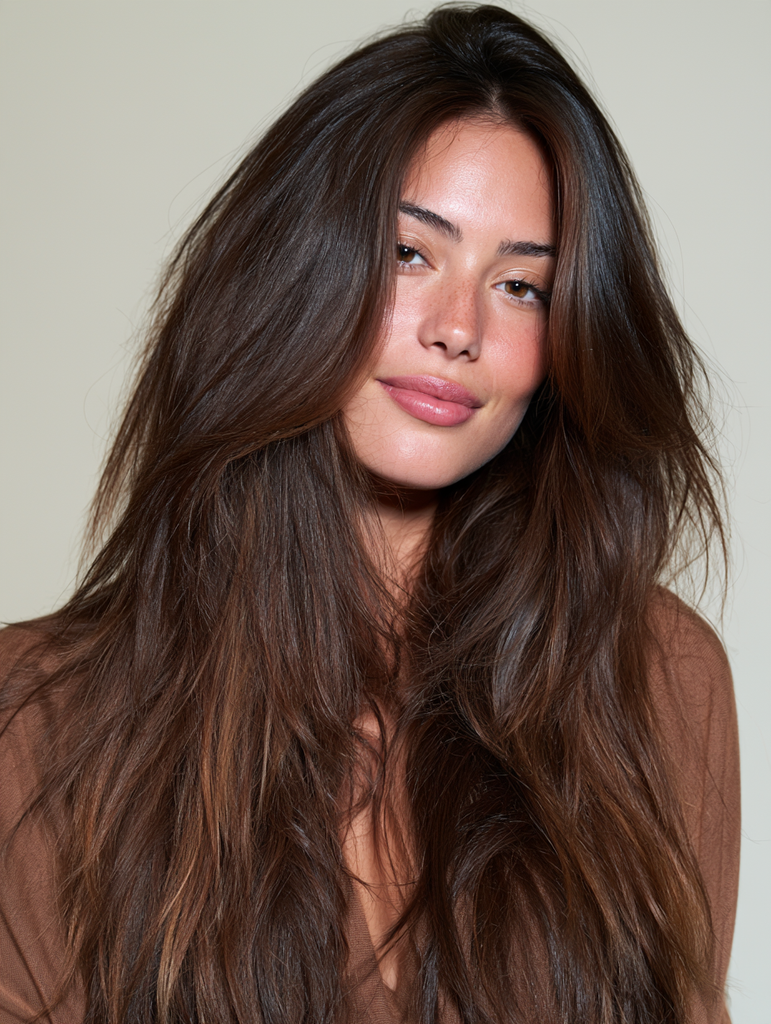
Apply root-lifting mousse around the crown before blow-drying upward with a large round brush. Smooth the remaining lengths with controlled tension and create gentle bends through selected layers. Finish with minimal serum through the ends, keeping the roots clean and naturally elevated.
Why Layering Works So Well With Long Straight Hair
Straight hair provides a clear canvas for showcasing precision layering. Even subtle differences in length can create visible movement, making it possible to refresh the hairstyle without relying on dramatic curls, extensive texture, or significant overall length removal.
Layering also provides practical flexibility. Longer layers can preserve density, interior shaping can reduce bulk, and facial sections can create softness without changing the entire haircut. Adjusting these elements allows the same basic length to work across fine, medium, and thick straight textures.
How to Style Long Straight Layered Hair
Begin with heat protection whenever blow-drying or using straightening tools. For a sleek result, work in controlled sections and direct airflow downward along the hair shaft. Moderate root elevation prevents the hairstyle from becoming unnecessarily flat while preserving its naturally smooth character.
To emphasize individual layers, create gentle bends around the face and lower ends rather than curling every section. Lightweight mousse, smoothing cream, or serum should be selected according to density. Fine straight hair generally needs considerably less product than thick or coarse strands.
Final Thoughts
Long hairstyles with layers for straight hair can range from subtle invisible shaping and low layers to dramatic butterfly cuts, feathered sections, curtain bangs, and distinctive V-shaped silhouettes. Each approach creates movement while allowing straight texture to remain sleek and beautifully recognizable.
Choose your layering according to density, strand thickness, facial proportions, and preferred maintenance level. With precise cutting, regular trims, and lightweight styling, long straight hair can maintain its polished character while gaining softness, dimension, movement, and a noticeably refreshed silhouette.
