Mexican tattoo ideas draw inspiration from Mexico’s diverse history, artistic traditions, folklore, religious imagery, and contemporary culture. Popular designs can include marigolds, sacred hearts, eagles, agave plants, traditional decorative patterns, and imagery associated with Día de Muertos. Mexican-inspired tattoos can celebrate heritage, family, faith, remembrance, national identity, or simply an appreciation for particular artistic traditions. Because Mexico contains many distinct Indigenous and regional cultures, understanding the specific origin of a motif is important when choosing a design.
How to Choose the Right Mexican Tattoo
Start by identifying the particular tradition, story, or personal connection you want the tattoo to represent. A marigold composition can reference Día de Muertos traditions, while religious imagery may reflect personal faith or family heritage. Eagles, native plants, architectural elements, and imagery influenced by Mexican folk art provide other creative directions. Avoid treating Aztec, Maya, Catholic, Día de Muertos, and modern Mexican imagery as interchangeable; each has its own context and history. Working with an artist familiar with the tradition that inspires your design can help create a more thoughtful and visually cohesive tattoo.
Mexican Tattoo Ideas
Image 1 – Decorative Agave Tattoo
This tattoo features a stylized agave plant rendered in delicate black linework, creating a distinctly Mexican-inspired botanical design. The pointed leaves spread outward in a compact fan, while each leaf contains ornamental dots, curved marks, and teardrop-shaped details. Small floral elements beneath the plant soften its sharp silhouette and give the composition a folk-art quality.

Rather than aiming for botanical realism, the design transforms the agave into a decorative emblem. Its modest size and clean execution make it especially suitable for the forearm or upper arm. The result feels earthy, artistic, understated, and closely connected to Mexico’s landscape and visual traditions.
Image 2 – Colorful Embroidered Hummingbird Tattoo
This vibrant hummingbird tattoo draws inspiration from the colorful appearance of traditional Mexican embroidery. Instead of conventional feather shading, the bird is constructed from tightly layered, thread-like strokes in turquoise, green, pink, purple, blue, and orange. Small leaves, curved stems, and a multicolored flower surround the hummingbird, reinforcing the textile-inspired aesthetic.
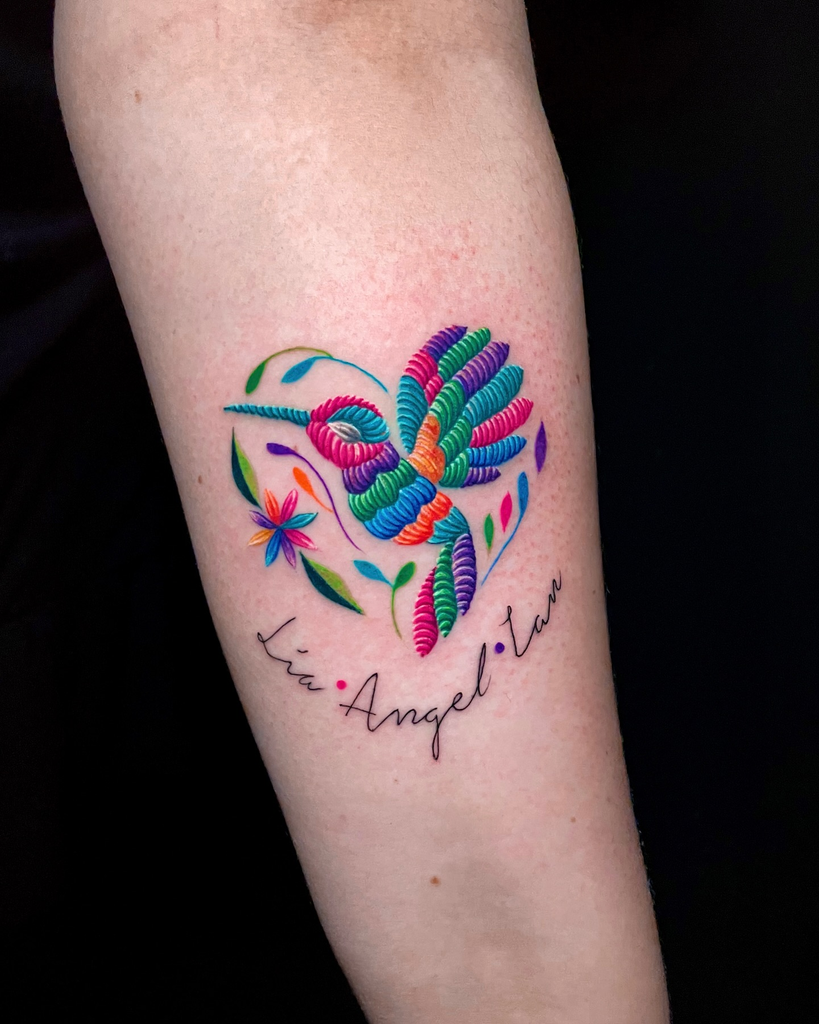
The handwritten name underneath adds a personal element without overpowering the central artwork. Its saturated palette creates a cheerful, handcrafted character that immediately attracts attention. For someone seeking a Mexican tattoo with folk-art influence rather than heavy traditional imagery, this design offers an elegant combination of nature, color, craftsmanship, and personal meaning.
Image 3 – Mexican Folk-Art Dog Tattoo
This blackwork dog tattoo uses dense ornamental patterns to turn a simple seated animal silhouette into an elaborate folk-art composition. Swirling lines, floral shapes, leaves, dots, and solid black sections fill the dog from its head to its curled body, creating strong visual movement without requiring color. The decorative treatment recalls the intricate patterning frequently associated with Mexican crafts and celebratory folk imagery.
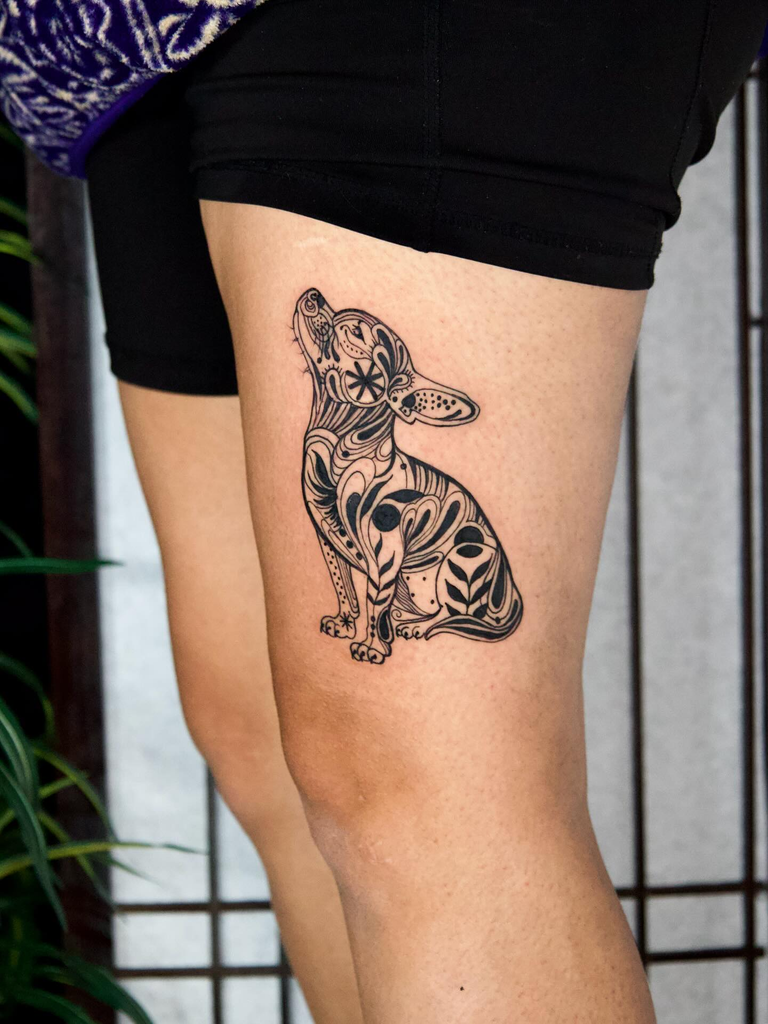
Its placement on the thigh provides enough space for the smaller interior details to remain readable. The upward-facing pose also gives the animal a lively, expressive personality. This idea works particularly well for combining affection for dogs with decorative Mexican-inspired aesthetics.
Image 4 – Mexican Eagle, Snake, and Cactus Tattoo
This tattoo presents one of Mexico’s most recognizable national motifs: an eagle confronting a snake while positioned around a prickly pear cactus. The imagery strongly recalls the central emblem of the Mexican flag, while torn-skin effects reveal sections of red, white, and green around the composition. Color is used selectively across the cactus, eagle, and flag elements, with darker shading adding depth around the edges.
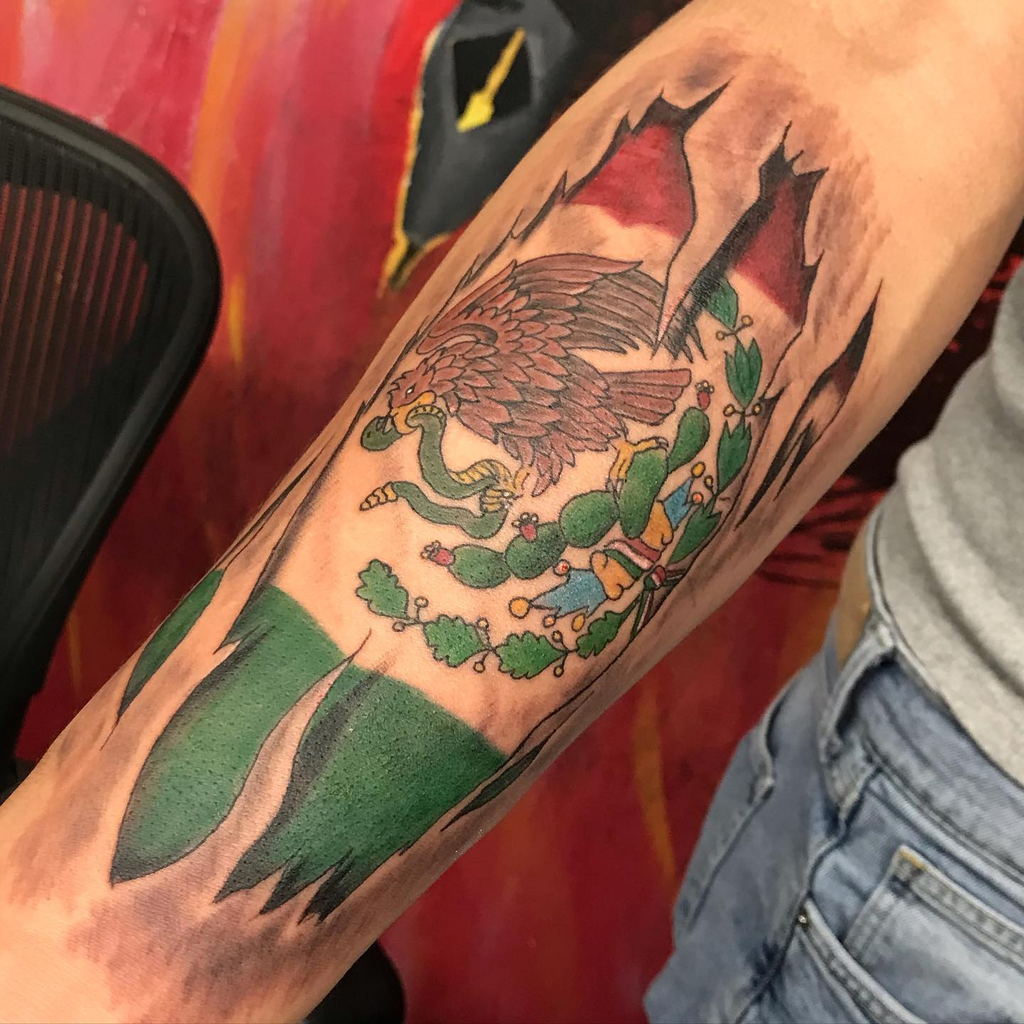
The elongated forearm placement accommodates the vertical arrangement particularly well. Symbolically, this is a direct expression of Mexican identity, heritage, and national pride, making it a powerful choice for someone wanting unmistakably patriotic imagery rather than subtle cultural references.
Image 5 – Eagle, Snake, and Nopal Blackwork Tattoo
This detailed black-and-grey tattoo reinterprets classic Mexican national imagery through a more naturalistic illustrative style. A large eagle dominates the upper portion, wings raised as it grips and confronts a coiling snake. Beneath them sits a cluster of prickly pear cactus pads, or nopales, grounding the composition in an immediately recognizable Mexican landscape symbol.
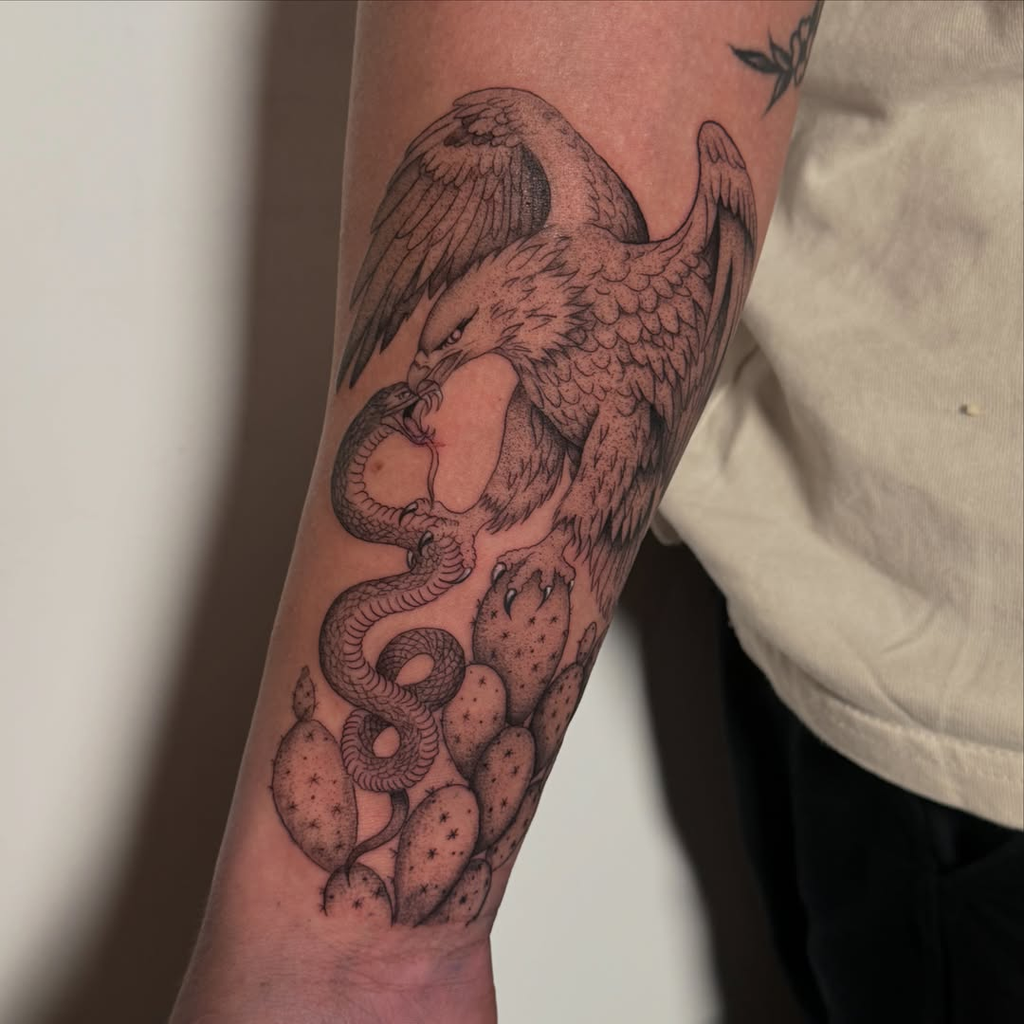
Fine lines describe individual feathers, scales, claws, and cactus textures, while restrained stippling and shading provide dimensionality. Without color, the piece feels timeless and almost engraved. The vertical forearm format suits the interaction between eagle, snake, and cactus beautifully, creating a sophisticated heritage-focused tattoo with considerable visual detail.
Image 6 – Mexican Woman Portrait Tattoo
This colorful portrait tattoo depicts a woman wearing a broad red sombrero, surrounded by stylized flowers and foliage. Her dark hair is arranged into exaggerated sculptural curls, giving the portrait a vintage tattoo aesthetic, while rosy cheeks, dark lips, and softly shaded facial features create a romantic character. A red bow at the neckline complements the hat and helps unify the composition.
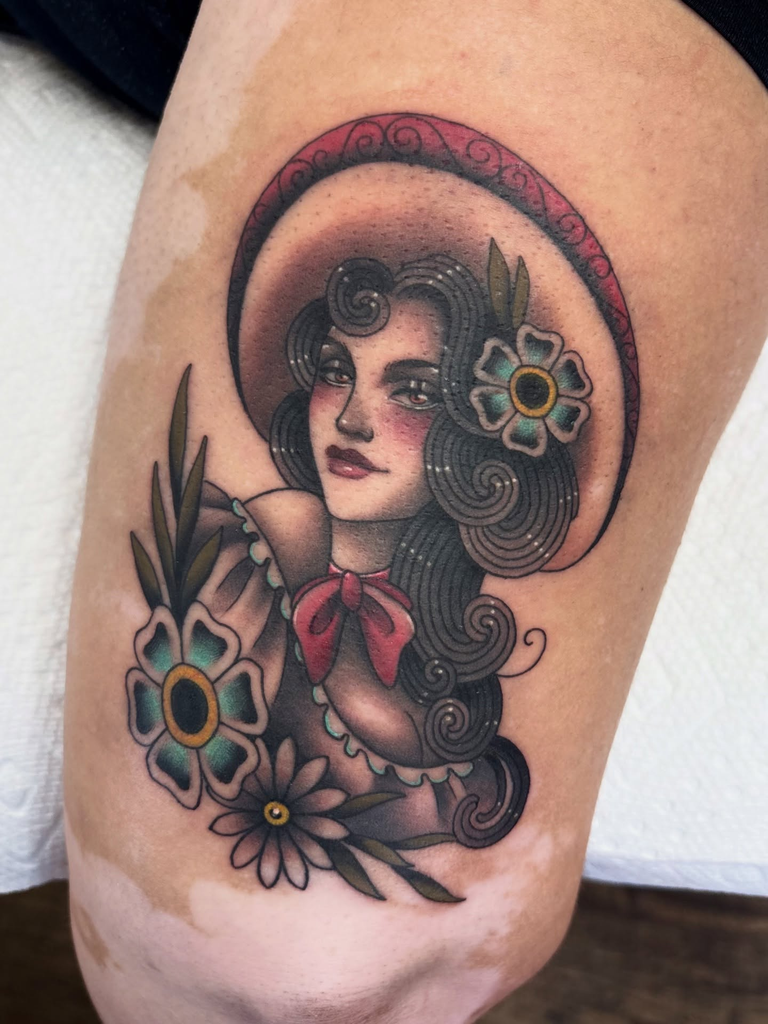
Turquoise, yellow, green, burgundy, and muted pink accents provide color without overwhelming the black outlines. The surrounding flowers frame the portrait naturally. As a Mexican-inspired tattoo idea, it combines feminine portraiture, traditional clothing references, floral decoration, and classic tattoo styling.
Image 7 – Sacred Heart and Eye Tattoo
This bold tattoo offers a highly imaginative variation on the sacred-heart motif, replacing the conventional center with a large, watchful eye. Thick black outlines contain saturated turquoise, magenta, yellow, green, and pink, producing an energetic folk-art appearance. Flames rise from the top while decorative scallops, dots, curved forms, and horn-like extensions surround the heart-shaped structure.
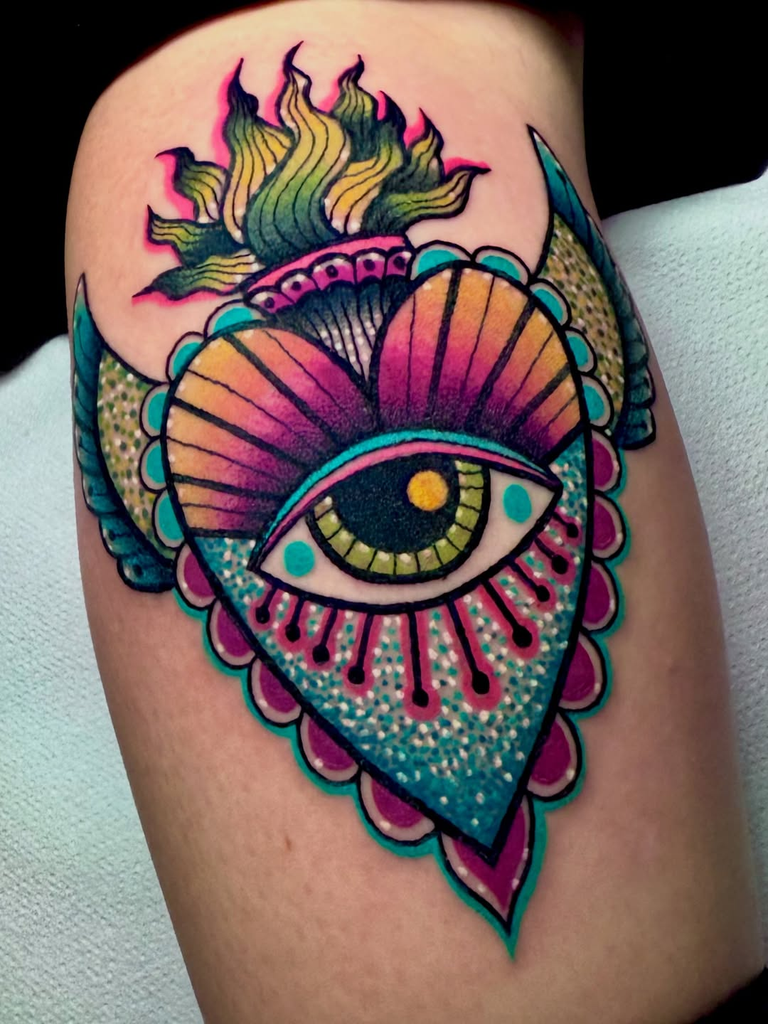
The oversized eye becomes the immediate focal point and gives the design a surreal, protective quality. Although it departs from traditional religious iconography, it draws on visual elements associated with Mexican devotional and folk imagery. It is an excellent concept for someone wanting something colorful, symbolic, unconventional, and instantly noticeable.
Image 8 – Quetzalcoatl-Inspired Feathered Serpent Tattoo
This dramatic forearm tattoo appears inspired by the feathered-serpent imagery associated with ancient Mesoamerican traditions, particularly Quetzalcoatl. The serpent’s body twists vertically along the arm, covered with overlapping scales and layered feather-like forms. Its elaborate head features a dramatic crest and highly ornamental details, producing an imposing sculptural appearance.

Black-and-grey shading creates substantial depth, while strong outlines keep the complicated shapes readable. The forearm placement allows the creature to follow the natural length of the limb, emphasizing its serpentine movement. For a Mexican tattoo rooted in pre-Hispanic cultural imagery, this concept offers a powerful alternative to modern national symbols and colorful folk designs.
Image 9 – Ramen and Coca-Cola Tattoo
This small black-and-grey tattoo depicts a detailed bowl of ramen beside a tall Coca-Cola can. Chopsticks lift noodles from the bowl, while eggs, meat, vegetables, and other toppings are carefully rendered through fine lines and compact shading. Unlike the other designs, this image does not display a clear Mexican theme; its subject matter instead combines Japanese food imagery with an internationally recognizable soft-drink brand.

The realism is impressive considering the tattoo’s relatively small scale, particularly in the noodles and individual ingredients. As inspiration, it demonstrates how favorite foods and drinks can become playful personal tattoos, though it would need Mexican culinary elements to fit a Mexican-themed collection.
Image 10 – Hummingbird and Embroidered Flowers Tattoo
This elegant shoulder tattoo combines a realistically rendered hummingbird with brightly colored flowers inspired by Mexican embroidery. The bird is illustrated primarily in black and grey, with finely layered feathers and soft stippling giving its body depth and movement. Surrounding it are vivid purple, pink, orange, and green botanical elements formed from raised-looking, threadlike strokes. This contrast makes the flowers resemble hand embroidery placed directly onto the skin.
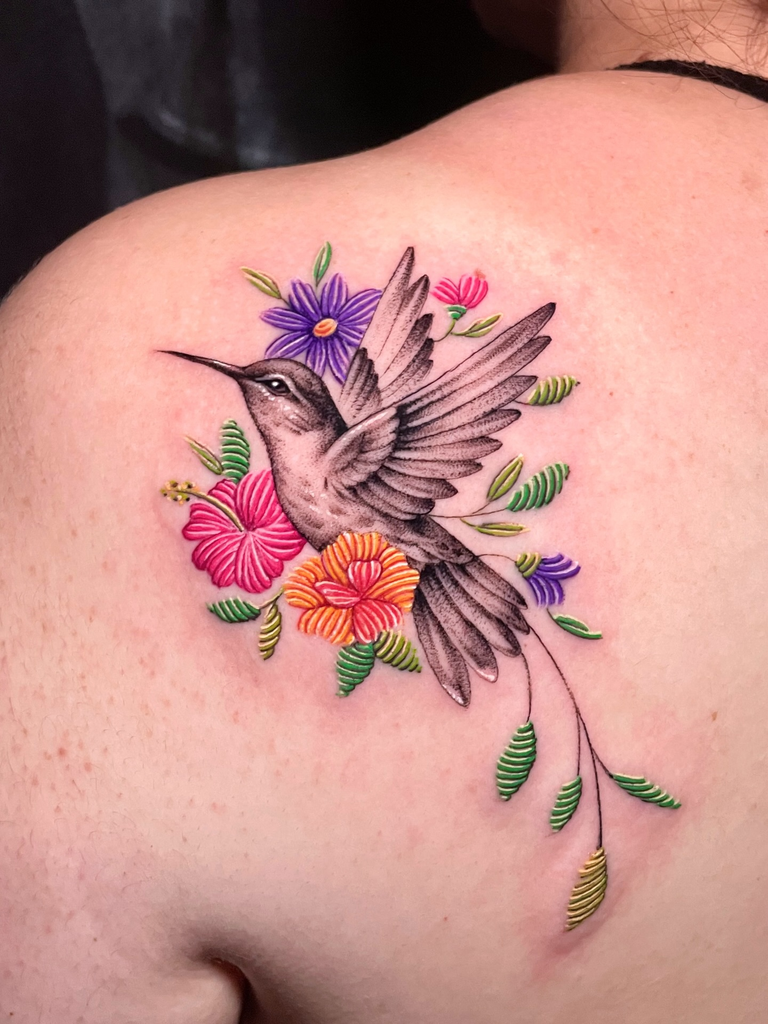
Long trailing leaves extend downward to complement the bird’s flight. The design beautifully blends naturalistic tattooing with Mexican textile aesthetics, creating a graceful celebration of nature, craftsmanship, color, and cultural artistic tradition.
Image 11 – Marigold Skeleton Tattoo
This playful tattoo combines a tiny dancing skeleton with a large orange flower, creating a charming interpretation of Mexican imagery associated with Día de Muertos. The skeleton’s skull emerges from the center of the blossom while its rib cage, arms, pelvis, and legs are drawn with delicate minimalist linework. The oversized orange flower recalls the warm colors of marigolds traditionally associated with Day of the Dead celebrations.
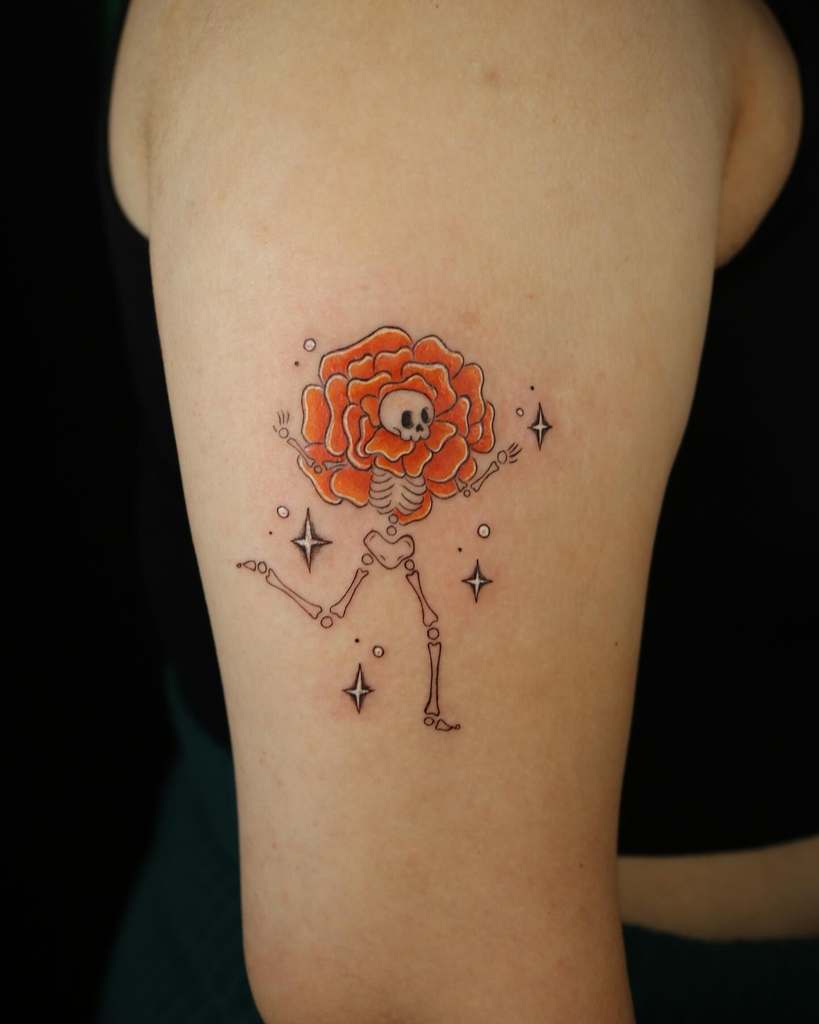
Small stars, dots, and circular accents surround the figure, adding a whimsical atmosphere and emphasizing its animated pose. Rather than appearing frightening, the skeleton feels joyful and celebratory, making this an appealing Mexican-inspired design about remembrance, mortality, and life.
Image 12 – Mexican Folk Mandala Tattoo
This blackwork tattoo features a symmetrical floral medallion composed of bold petals, ornamental curls, geometric lines, and small diamond-shaped accents. Eight large pointed petals radiate around a detailed central motif, creating the balanced appearance of a mandala or decorative folk-art rosette. Thick black sections contrast with areas of untouched skin, allowing the pattern to remain highly readable despite its compact size.
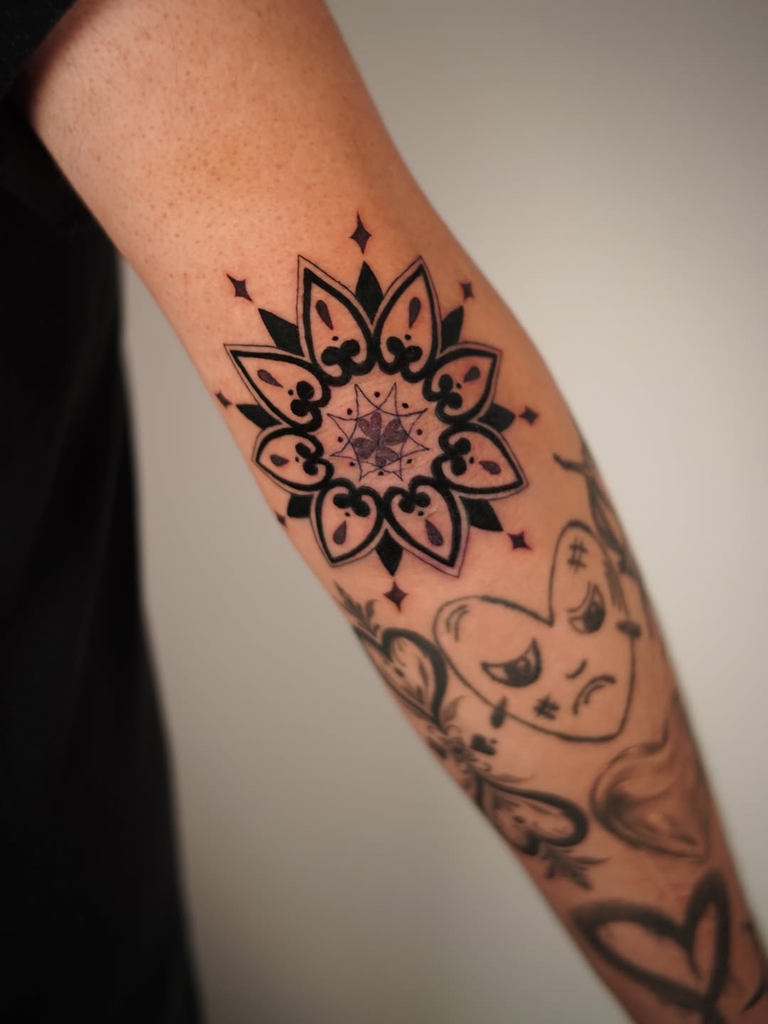
Small star-like shapes surrounding the flower extend the composition without making it overly dense. Although the imagery is more broadly ornamental than explicitly Mexican, its floral geometry can complement Mexican folk-art collections, especially when paired with embroidery-inspired patterns, traditional flowers, or other decorative cultural motifs.
Image 13 – Nopal Cactus in Talavera-Style Vase Tattoo
This colorful tattoo presents a flowering nopal cactus arranged inside an ornate blue-and-grey ceramic vase. Multiple green cactus pads rise upward in a compact bouquet, decorated with fine parallel lines that create an embroidered texture. Bright pink and orange blossoms surround the cactus, bringing warmth and movement to the composition. The vase features elaborate blue floral patterns reminiscent of traditional Mexican decorative ceramics, strengthening the cultural character of the piece.

Combining cactus imagery, pottery, flowers, and saturated color makes the tattoo unmistakably festive. It is an excellent Mexican tattoo idea for someone wanting something botanical, feminine, decorative, and culturally recognizable without relying on patriotic symbolism.
Image 14 – Embroidered Butterfly Tattoo
This delicate forearm tattoo transforms a butterfly into a miniature piece of colorful embroidery. Its four wings are divided into narrow sections filled with raised-looking strokes of turquoise, pink, orange, purple, green, and yellow. Thick black edging frames the colorful interior and gives the butterfly a textile-like border, creating the impression of stitched fabric translated onto skin. Fine antennae and a flowing handwritten word add softness to the otherwise symmetrical composition.
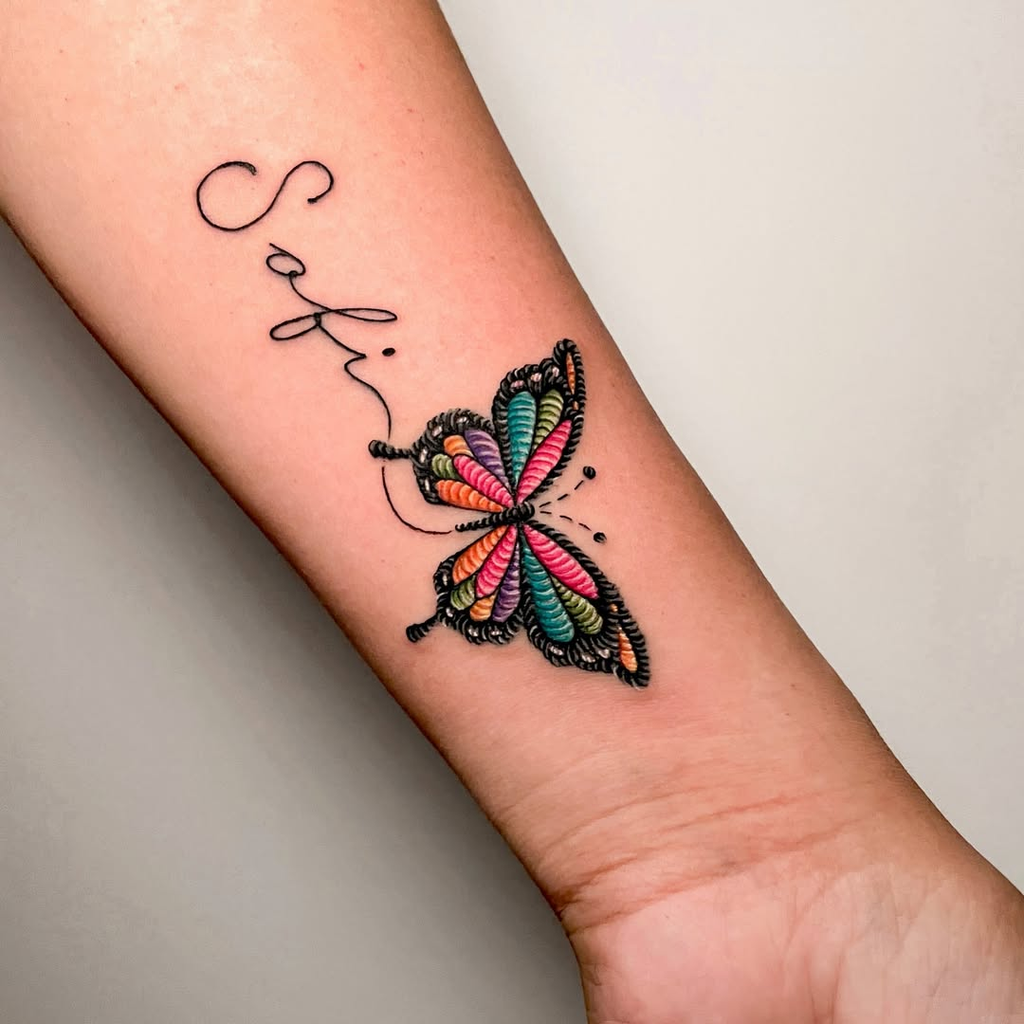
The embroidery effect connects the tattoo visually with Mexican textile and folk-art traditions. Small yet highly detailed, this design offers a cheerful way to combine butterfly symbolism with colorful handcrafted aesthetics and personal meaning.
Image 15 – Mexico Map and Eagle Tattoo
This black-and-grey tattoo places a detailed eagle inside the recognizable geographical outline of Mexico. The bird occupies much of the country’s silhouette, with layered feathers, powerful talons, and a snake incorporated into the composition, referencing imagery associated with Mexico’s national emblem. Additional cactus elements appear near the lower portion, reinforcing the connection with Mexican landscape and symbolism.
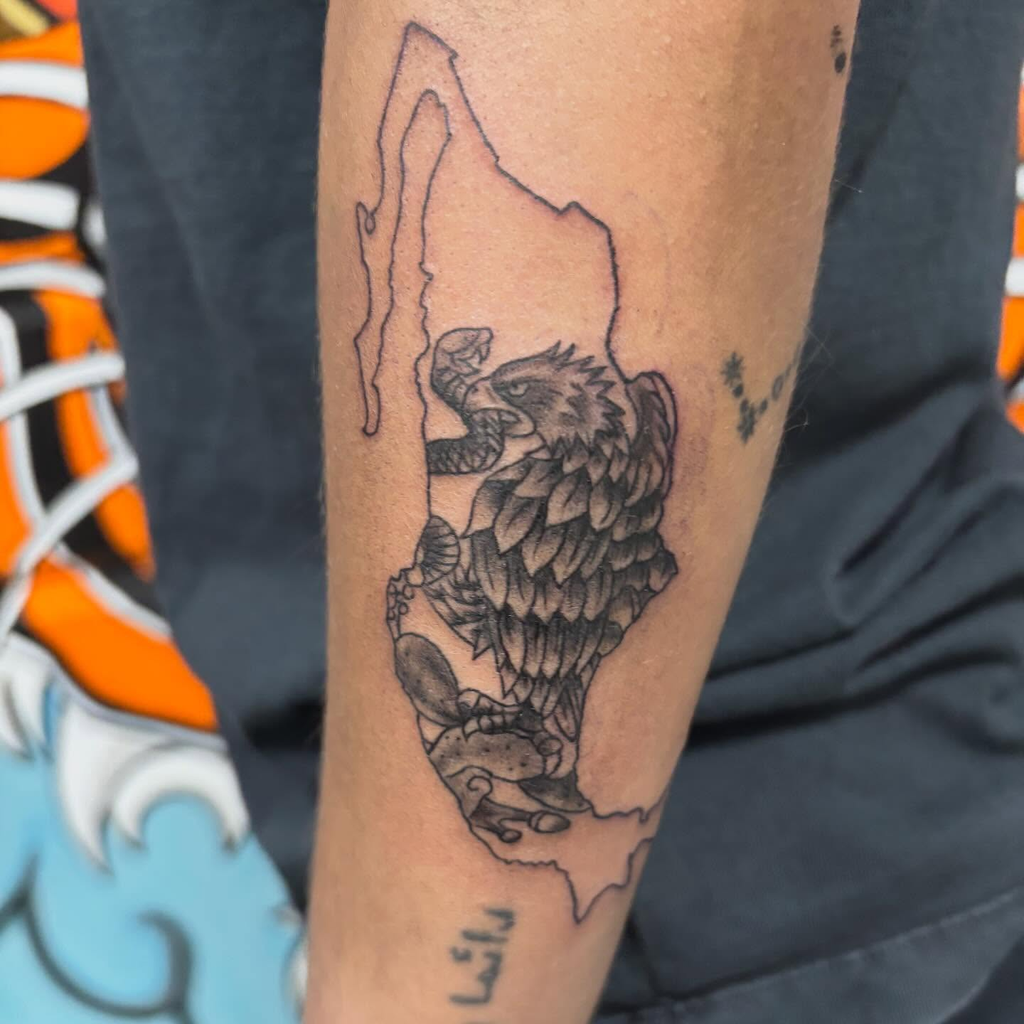
Fine shading gives the eagle dimension while the simple map outline clearly frames the entire concept. By combining national geography with emblematic imagery, the tattoo communicates Mexican identity immediately. It is a strong heritage-focused design for someone wanting to represent homeland, ancestry, cultural connection, or national pride.
Image 16 – Floral Embroidery Swallow Tattoo
This colorful tattoo depicts a flying swallow whose silhouette is partially constructed from flowers and leaves. Solid black areas define the wings, head, and pointed tail, while vivid pink, purple, blue, orange, green, and yellow botanical forms fill sections of the bird’s body. The flowers use textured parallel strokes that closely resemble embroidered thread, giving the design a handcrafted Mexican folk-art quality. Negative skin space between the decorative elements keeps the composition light despite the saturated colors.

The long tail adds elegance and movement. Combining a classic swallow silhouette with embroidery-inspired ornamentation creates a distinctive tattoo representing freedom, travel, transformation, and traditional decorative craftsmanship.
Image 17 – Mariachi Avocado Tattoo
This tiny tattoo turns an avocado into a cheerful Mexican-inspired character. The halved avocado has a smiling face, small arms and legs, and a prominent brown pit forming the center of its body. A colorful sombrero decorated with red, green, white, and turquoise details sits above its head, while miniature maracas appear in both hands.
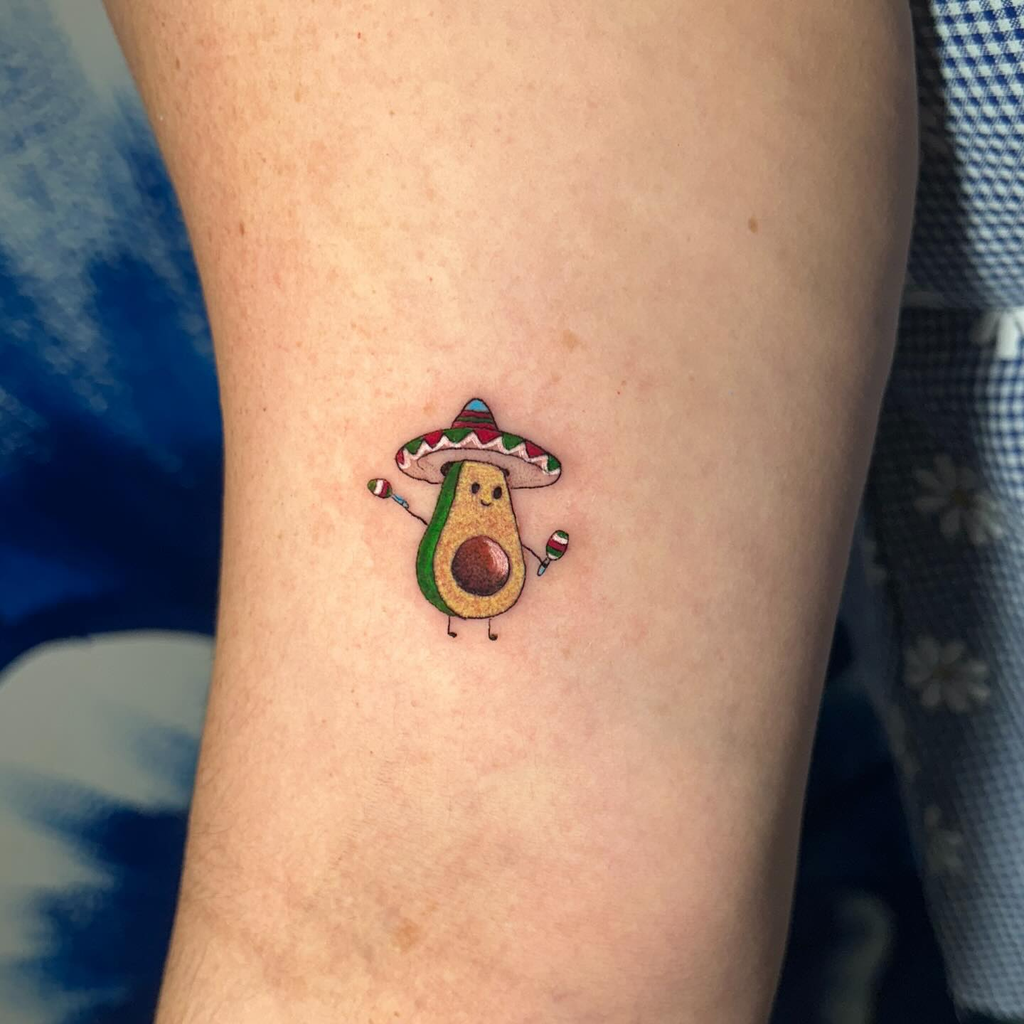
The simple cartoon proportions make the character playful and immediately readable despite the tattoo’s small scale. Green, yellow, red, and brown coloring reinforces the lighthearted aesthetic. Rather than presenting Mexican culture formally, this design uses recognizable food and festive imagery to create a humorous, cute, and approachable tattoo concept.
Tattoo Aftercare Tips
Mexican-inspired tattoos can feature detailed linework, saturated colors, extensive shading, and intricate decorative elements:
- Gently wash the tattoo with mild, fragrance-free soap.
- Apply moisturizer according to your tattoo artist’s aftercare instructions.
- Avoid scratching or picking at peeling skin.
- Avoid swimming and prolonged soaking while the tattoo heals.
- Minimize friction from tight clothing or accessories.
- Protect the healing tattoo from direct sunlight.
- Once fully healed, use sunscreen to help minimize fading.
Consistent aftercare can help preserve bold colors, detailed patterns, strong outlines, and smooth shading.
Conclusion
Mexican tattoo ideas offer an enormous range of possibilities, from colorful floral and folk-inspired artwork to religious, historical, and heritage-focused designs. Marigolds, sacred hearts, eagles, agave, Día de Muertos imagery, and culturally specific motifs can each tell very different stories. Researching the origins and significance of your chosen imagery can help turn an attractive design into body art with deeper personal and cultural meaning.
Frequently Asked Questions (FAQ)
Q1: What are popular Mexican tattoo ideas?
Popular concepts include marigolds, sacred hearts, eagles, agave plants, religious imagery, Día de Muertos-inspired artwork, folk-art influences, and designs celebrating Mexican heritage.
Q2: What do Mexican tattoos symbolize?
Their meanings vary widely. Depending on the imagery, a tattoo might represent family, heritage, faith, remembrance, resilience, identity, or a connection to Mexican culture.
Q3: What flowers are popular in Mexican-inspired tattoos?
Marigolds are particularly recognizable because of their association with Día de Muertos, while roses and other floral imagery also appear in many Mexican artistic and religious contexts.
Q4: Where do Mexican tattoos look best?
Popular placements include the forearm, upper arm, shoulder, chest, back, thigh, and calf. Larger areas work especially well for elaborate compositions.
Q5: How can I make a Mexican-inspired tattoo culturally respectful?
Research the specific origin and meaning of the imagery rather than treating Mexican culture as a single visual style. If the design incorporates Indigenous, ceremonial, or religious symbolism, consult knowledgeable sources and an artist familiar with that tradition.
